Hot Water Slab Leak Repair in Indio, CA

Resolving sub-slab hot line failures that cause hot spots on floors, nonstop water heater cycling, and exorbitant natural gas or electric utility bills.

Call for Hot Line Testing: (888) 205-7875
Thermal Failure Patterns

Why Hot Water Lines Fail First Under Desert Slabs

In our desert climate, more than seventy percent of foundation plumbing failures occur on the hot water distribution side. Domestic copper tubing expands when heated water rushes toward faucets and contracts when the water cools. When embedded under concrete without adequate expansion insulation sleeves, this repetitive thermal movement rubs the outer copper wall against surrounding coarse gravel and sharp sand particles. Over years of thermal cycling, mechanical friction wears the copper thin from the exterior.

At the same time, high water temperatures accelerate internal chemical reactions. Dissolved minerals and chlorine compounds present in municipal desert water become significantly more aggressive at temperatures above 120 degrees Fahrenheit, creating rapid pitting along inner pipe walls. When a hot water line leak under slab Indio home occurs, the damage to energy bills, water heaters, and floor coverings escalates swiftly.

Technicians specializing in hot water slab leak repair Indio properties rely on fast isolation techniques to safeguard expensive water heating equipment and protect floor structures.
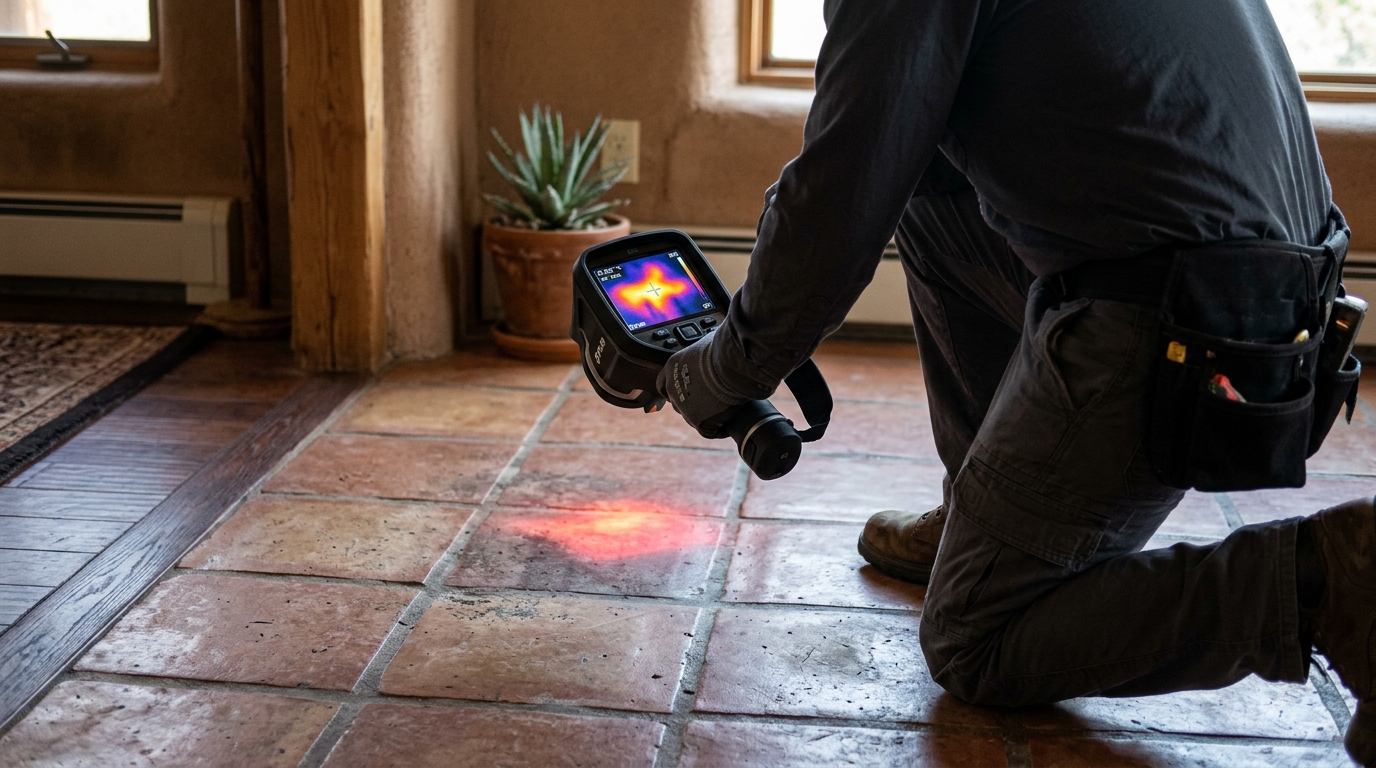
Thermal imaging scan revealing hot water slab leak blooming beneath tile floor in Indio CA
Thermal cameras display the concentrated heat signature of hot water escaping from an underground foundation pipe into concrete flooring.
Telltale Indicators

Classic Symptoms of a Domestic Hot Water Slab Leak

Because hot water lines maintain elevated temperatures, they present distinct physical warning signs inside Indio homes:

01

Warm Spot on Floor Indio

Walking across bathroom tiles, hallway walkways, or bedroom carpets and feeling a concentrated area of radiating heat underfoot. In extreme cases, pets may sleep in the area or tiles may feel noticeably hot to the touch.

02

Water Heater Running Constantly Indio

The water heater burner fires continuously around the clock, or an electric unit constantly pulls power. The tank never reaches its set temperature because heated water is continually escaping into the earth beneath the home.

03

Steep Gas or Electric Bill Increases

Southern California Gas Company or Imperial Irrigation District (IID) electric bills jump significantly without increased household heating use, caused by hundreds of gallons of continuously heated water discharging underground.

04

Premature Loss of Hot Water Pressure

Shower water turns lukewarm much faster than normal or water pressure noticeably dips when hot taps are opened in multiple bathrooms simultaneously due to lost volume in the slab.

Is Your Water Heater Burning Constantly?

Continuous cycling will burn out your water heater elements or gas burners prematurely. Turn the unit down and speak directly with our foundation leak dispatch team.

Call (888) 205-7875
Diagnostic & Repair Strategy

Repair vs. Reroute for Hot Water Foundation Lines

When diagnosing an underground hot line rupture, our first step is utilizing digital FLIR thermal imaging cameras. Hot water dissipates outward from the pipe, warming the concrete mass and generating a distinct thermal footprint that mirrors the pipe's trajectory under the slab. Once confirmed, homeowners face a critical decision:

Option A: The Single-Point In-Slab Spot Repair

Direct excavation involves opening the concrete slab directly over the rupture point, exposing the copper tubing, and replacing the damaged section with heavy-wall Type K copper and brazed joints. While this restores water pressure, it leaves the remainder of the thermally stressed hot water line under concrete. If the copper has thinned throughout the line due to water chemistry, another breach may occur just feet away within months.

Option B: The Non-Invasive Overhead Reroute

In desert slab homes, an overhead slab leak reroute is overwhelmingly the superior engineered solution for hot water failures. Instead of jackhammering flooring, the leaking underground hot line is permanently isolated and capped at both ends. A continuous run of flexible, non-corrosive PEX piping is installed from the water heater manifold through interior walls and ceiling cavities directly to the affected bathroom or kitchen fixture.

This eliminates subgrade thermal expansion stress completely, protects valuable flooring from destruction, and prevents repeat hot water failures beneath the foundation. If multiple hot water runs are failing concurrently, evaluating whole-house repiping or resolving copper pinhole leaks provides permanent security.

Immediate Safety Recommendation

If your hot water floor spot is growing or your water heater is violently rumbling from non-stop heating, switch your gas valve to the pilot setting or turn off the electric breaker immediately, then call (888) 205-7875 for service.

Frequently Asked Questions

Hot Water Slab Leak Questions Answered

Can a hot water slab leak damage my water heater?

Yes. When heated water constantly escapes, cold groundwater continuously fills the tank, forcing burners or electric elements to operate 24 hours a day. This causes heavy sediment calcification, tank thermal stress, and premature failure of the entire water heater appliance.

Will the warm floor dry out on its own if I turn off the heater?

Turning off the heater stops additional heat input, but the pressurized water line will continue leaking water under the concrete until the main supply is shut off or the line is isolated and rerouted. The saturated subsoil takes weeks to dry properly.

Is an overhead reroute of the hot water line noisy?

No. Modern cross-linked polyethylene (PEX) tubing dampens water flow noise naturally and absorbs hydraulic pressure spikes, operating much more quietly than rigid metallic copper piping.